


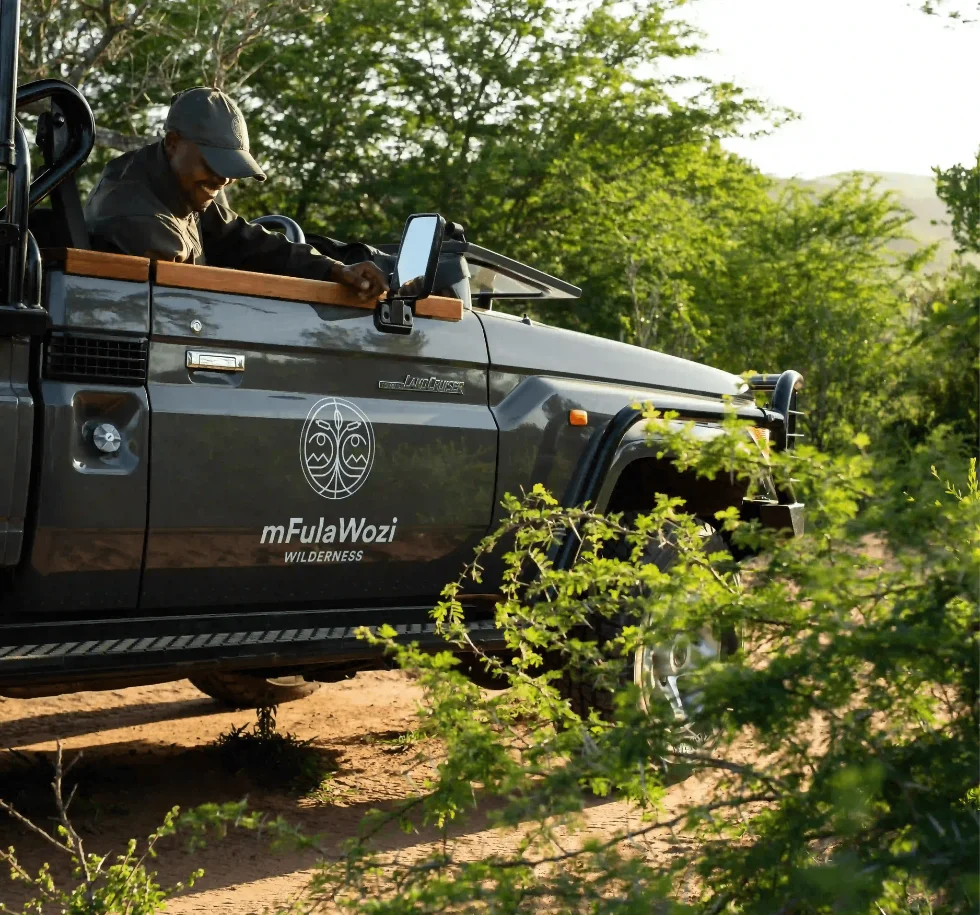
A guide cuts the engine on the embankment of the White iMfolozi River and lets the silence take over. No radio chatter, just hooves somewhere in the dark and the river moving below. This kind of morning rests on a structure most guests never think to ask about: private reserves across South Africa now protect close to three times as much land as the country’s national parks and other state-protected areas combined, according to conservation research published by Africa Geographic, funded almost entirely by travellers rather than by government budgets.
That funding model is the foundation of luxury eco-tourism South Africa has built its reputation on, once the marketing language is set aside. Five-star suites sit on land that might otherwise have reverted to grazing or development, and every night booked underwrites anti-poaching patrols, habitat restoration and wages for the people whose ancestral land the reserve occupies.
What the Term Actually Means
The phrase gets used loosely, sometimes as little more than a solar panel on the roof of an ordinary hotel. Genuine luxury eco-tourism, the kind South Africa has spent decades developing, rests on private ownership of protected land, revenue that visibly funds conservation and community development, and comfort that never comes at the expense of the ecosystem it sits inside.
One version of eco-luxury measures success in occupancy rates. The other measures it in rhino calving numbers, employment figures for surrounding villages and hectares returned to wilderness.
Why South Africa Became a Centre for This Kind of Travel
Wildlife in South Africa had almost no economic value through the middle of the twentieth century, and the toll on species like white rhino and disease-free buffalo shows in the record: some populations fell to a few hundred individuals nationwide. The turnaround began once private landowners started converting cattle farms and cropland into game reserves, a shift researchers describe as having multiplied the country’s wildlife roughly fortyfold since the 1960s.
Hluhluwe iMfolozi Park, established in 1895, sits at the centre of that story as the oldest proclaimed nature reserve on the continent and the ancestral home of the world’s white rhino population. It borders mFulaWozi Wilderness today, and it shaped the same conservation model that both of mFulaWozi’s lodges were built on: land returned to wildlife, funded by tourism.
Zululand’s Version of the Model
KwaZulu-Natal’s Zululand carries this history more visibly than most regions. Ten amakosi, all descendants of the Shaka dynasty, agreed in 2010 to release 16,000 hectares of tribal bushveld into conservation use, joining it to the greater Hluhluwe iMfolozi Park and opening wildlife corridors that hadn’t existed in generations. That decision is the origin of mFulaWozi Wilderness and its two lodges.
Mthembu Lodge, on the embankment of the White iMfolozi River, was hand-built stone by stone by the Mthembu clan on their own ancestral land: seven suites and two family units arranged in a circle, a shape carrying its own meaning in Zulu tradition. A short distance away, Biyela Lodge climbs the hillside above the same river, twelve standalone suites named for Chief Phiwayinkosi Biyela, most with their own plunge pool.
The Conservation Numbers Behind the Comfort
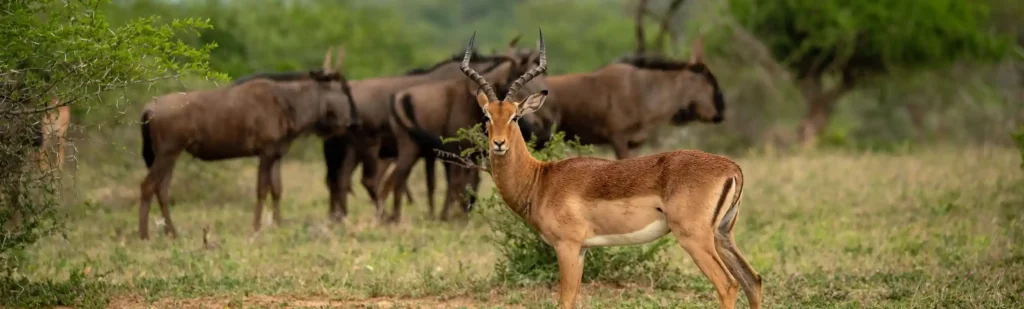
The white rhino population around both lodges recovered from fewer than 100 animals worldwide in the late 1800s into one of the six most important strongholds recognised by the IUCN African Rhino Specialist Group. Elephant, absent from the area for eighty years after historic overhunting, were reintroduced and now number close to 700, their growth managed through contraception to keep the herd in balance with the land. Lion, introduced in the early 1990s, faced steep inbreeding before new bloodlines secured a population that now numbers close to 120.
None of that happens without tourism revenue. Every stay at mFulaWozi feeds directly into that conservation work, from anti-poaching patrols to habitat protection to the training of local guides who carry the reserve forward.
Community Partnership as Part of the Model
The best examples of this kind of travel share a second thread beyond conservation: the communities whose land became the reserve remain inside the story rather than displaced by it. mFulaWozi describes its purpose as a journey of purpose and the creation of a culture of mutual respect, and that shows up in practical terms: hospitality and field guiding qualifications for local residents, tourism-linked initiatives run by the surrounding communities, and a reserve built by, not just named after, the Zulu clans who own the land.
Meeting the Landscape on Foot
For travellers who want to meet this landscape on foot rather than from a game vehicle, Wilderness Walks leave from either lodge, carrying day packs across 7 to 15 kilometres toward a fly camp with no fixed trail and no designated campsite. There is no vehicle to retreat to and no engine to mask the sound of something moving through the grass nearby, just a guide reading tracks that most guests would otherwise walk straight past.
Evaluating a Genuine Stay
With around 9,000 private reserves and game farms operating across the country, not every property claiming the eco-luxury label backs it up. A few markers separate the genuine ones: land ownership and heritage that predates the tourism operation, transparency about where guest spending actually goes, community roles that extend beyond service staff, and conservation outcomes that can be measured rather than just described, population recoveries and land returned to wilderness among them. mFulaWozi’s 2025 Luxury Lifestyle Award for Best Luxury Safari Lodge in KwaZulu-Natal recognises a property built against that checklist rather than a marketing budget.
Travellers weighing where to stay within Zululand can compare Mthembu and Biyela Lodges directly, with rates and availability listed on the reserve’s rates page, or read the KZN safari lodges guide for wider regional context.
An Invitation
The luxury eco-tourism South Africa is known for was never meant to be a marketing category. It is a working model, land protected, communities included, comfort funded by conservation rather than competing with it. Back on the riverbank, the guide starts the engine again as the herd drifts on, and the light beginning to come up over the White iMfolozi is the same light that funded its own protection the night before, one booking at a time. Discover Mthembu Lodge or Biyela Lodge to see which suits your stay, or read more about the wider reserve before you enquire.